Making Your Customers Food Supply Safer
WELCOME TO FOOD SANITATION SERVICES
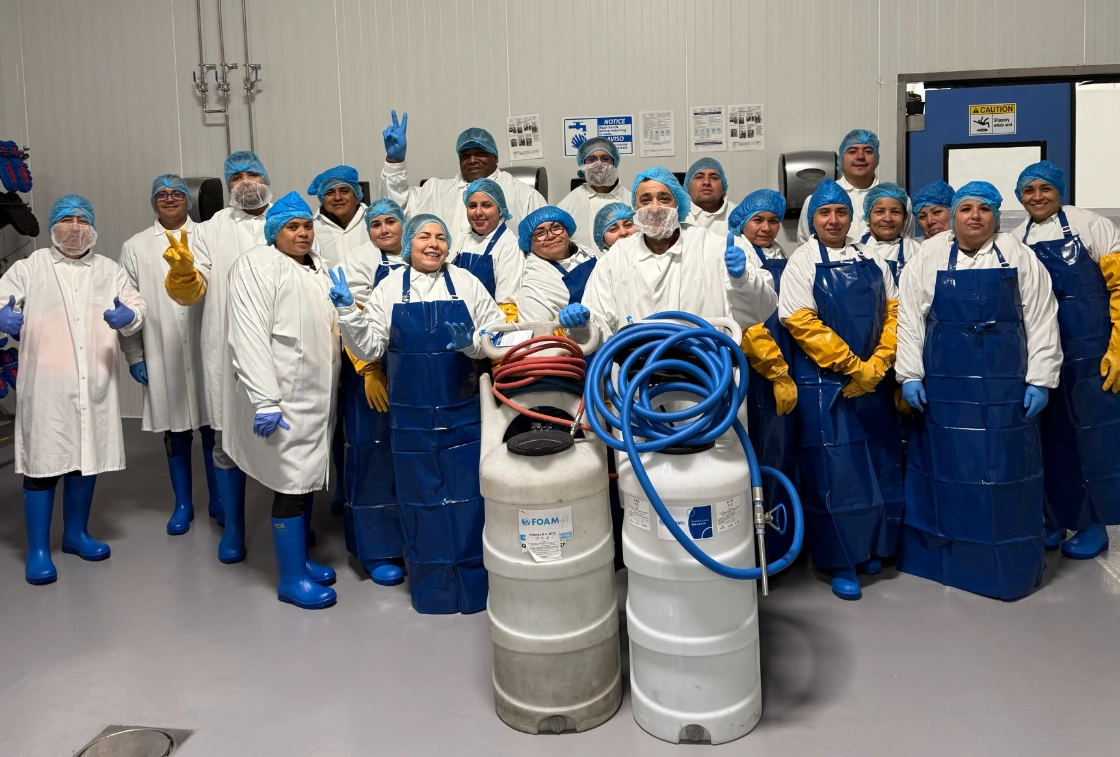
Our Sanitation and Hygienic Service experts have a passion for food safety, We work with our customers through strategic consulting, robust education programs, and industry-leading expertise.
Here is a breakdown of what a world-class sanitation mission looks like:
Get Your Free Inspection
Sign up now to get your free inspection from FSS
Our Mission
Food plant sanitation: More than simple cleaning
A food plant sanitation mission isn’t just about “cleaning up”—it’s a rigorous, scientific commitment to ensuring that every product leaving the facility is safe for human consumption. At its core, the mission is to eliminate biological, chemical, and physical hazards through a systematic approach.
The Golden Rule:
You cannot sanitize a surface that isn't already clean. Sanitation is the final "kill step," but cleaning is the heavy lifting
Hygienic Conveyor
In industries like food processing, pharmaceuticals, and cosmetics, a “hygienic conveyor” isn’t just a piece of equipment—it’s a critical line of defense against contamination. Unlike standard industrial conveyors, these are designed for sanitary performance and easy cleaning. Here is a breakdown of what makes a conveyor truly hygienic.
Core Design Principles: To meet strict FDA, USDA, or EHEDG standards, hygienic conveyors focus on eliminating “harborage points” where bacteria (like Listeria or Salmonella) can grow.
- Open Frame Construction: Using spaced-out frames rather than enclosed tubes ensures there are no hidden cavities for debris to hide.
- Minimal Fasteners: You’ll see fewer bolts and threads. Where they are necessary, acorn nuts or smooth-head bolts are used to prevent "gunk" buildup in the grooves.
- Self-Draining Surfaces: Horizontal surfaces are often pitched (angled) so that water and cleaning chemicals run off rather than pooling.
- Washdown Rated: Components like motors and bearings are sealed (often IP69K rated) to withstand high-pressure, high-temperature directional spraying.

Core Objectives
The "Why" behind the scrubbing and sanitizing:
Consumer Safety
Regulatory Compliance
Brand Protection
Operational Efficiency
Our cleanup process

The 7 Steps of Wet Sanitation
To achieve the mission, most plants follow a standardized clinical cycle:
Dry Pick-up
Action
• Remove large debris/scraps
Purpose
• Clear the way for chemicals
Pre-Rinse
Action
• Use water to loosen soils
Purpose
• Removes 90% of visible waste
Soap & Scrub
Action
• Apply detergent and agitate
Purpose
• Breaks down fats, proteins, and biofilms
Post-Rinse
Action
• Wash away soap and soils
Purpose
• Prepares surface for inspection
Inspect
Action
• Visual and ATP testing
Purpose
• Verifies the "clean" before the "sanitize"
Sanitize
Action
• Apply microbial killers
Purpose
• Kills remaining bacteria (no rinsing).
Dry | Reassemble
Action
• Remove moisture
Purpose
• Prevents bacterial regrowth in standing water
Proudly Serving The Food Industry since 2006
Food Sanitation Services is committed to making sure every job is completed to the client’s satisfaction from start to finish. We are always accessible and easy to communicate with, and we do not stop until the job is complete and effective.


Key Success Pillars
A mission only succeeds if the culture supports it:
Sanitary Design
Ensuring equipment is built without "dead spots" or niches where bacteria can hide
Environmental Monitoring
Ensuring equipment is built without "dead spots" or niches where bacteria can hide
Continuous Training
Moving sanitation from a "janitorial" mindset to a "food safety technician" mindset